- Romanticism in America
- Edgar Allan Poe and Romanticism in America
In the late 1700s and early 1800s, romanticism emerged as the predominant literary style across Europe, sparked by the influential ideas of French philosopher Jean Jacques Rousseau and German writer Johann Wolfgang von Goethe. This movement, which originated from France and Germany before spreading to England, Europe, and America, centered on themes such as individual rights, a rejection of convention, a fascination with nature and the supernatural, and an embrace of emotional expression and imagination. The catalyst for the romantic era was the French Revolution (1789-1799), which championed liberty and the human spirit in contrast to the Enlightenment‘s focus on reason. Romanticism, in response, emphasized emotion, imagination, and subjectivity over rationalism. (Ervin 1999)
Until around 1870, romanticism left its mark on various forms of American prose. In America, a variant of romanticism called transcendentalism emerged, particularly in New England. Transcendentalists, like Ralph Waldo Emerson, rejected both Enlightenment rationalism and established religion, favoring instead the celebration of individualism, nature, and the power of the human imagination to connect with the universe.
The confidence and nationalism of the young United States fostered historical fiction, which romanticized American identity and explored human nature and emotions. (Hoffman1995: 2-11) Nathaniel Hawthorne, influenced by transcendentalism to some extent, delved into ethical inquiries about sin and punishment, offering a less optimistic view compared to transcendentalist ideals.
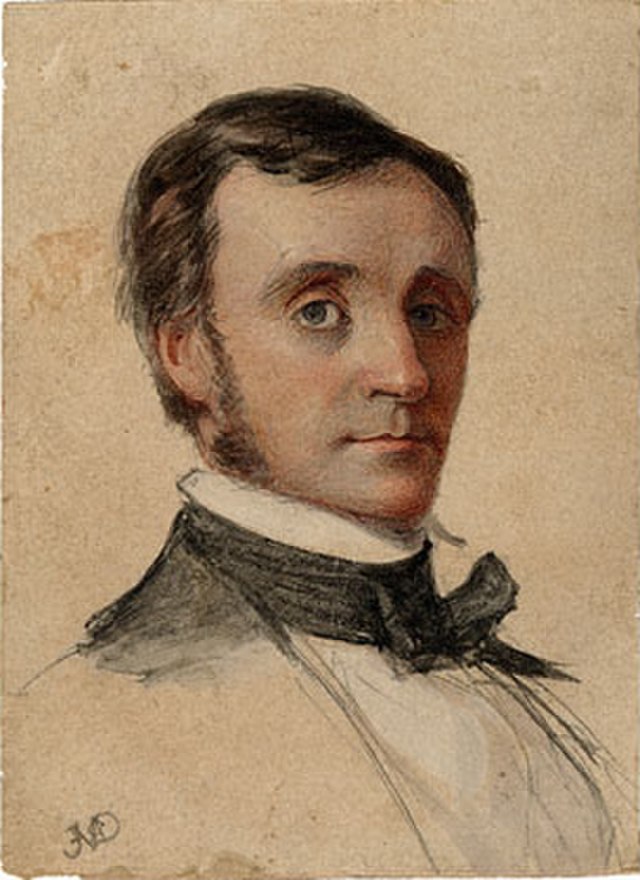
Slika-2.1.1: [1] Edgar Allan Poe by John A. McDougall. Izvor: https://upload.wikimedia.org/wikipedia/commons/c/c9/Edgar_Allan_Poe_miniature_by_John_A._McDougall.jpg
Edgar Allan Poe, on the other hand, challenged the optimism of transcendentalism in his dark and unsettling prose and poetry. His works, obsessed with death, madness, and violence, reflect his own troubled life, serving as a stark contrast to the transcendentalist emphasis on human creativity and the beauty of nature. The primary focus of Edgar Poe‘s literary legacy lies in his short stories, where he showcased his remarkable skill and attained artistic excellence. Building on the experiments initiated by Irving, Hawthorne, and other contemporaries, Poe played a pivotal role in shaping a new genre, endowing it with features now considered essential in identifying the American Romantic novel. Unsatisfied with practical outcomes and recognizing the need for theoretical analysis of his own and others‘ experiences, Poe developed a theory of the genre, which he outlined in an article on Hawthorne published in the 1940s.
Poe made a significant impact on the development of American and global fiction by advancing various genre subcategories such as detective fiction, science fiction, and psychological narratives. While American Romantics typically infused their fantastical tales with vivid imagination and intricate domestic details, Poe distinguished himself by prioritizing authenticity through scientific principles, setting a precedent for fictional narratives. Pioneers of technological and sociological branches of science fiction, like Jules Verne and H.G. Wells, universally recognized Poe as their theoretical precursor and mentor, with Verne even dedicating one of his novels to Poe‘s memory. In Poe‘s poetry, the imagery transcends specific definitions or plots, aiming to evoke emotional responses in the reader‘s imagination, often tinged with mystical undertones. Renowned American critic W.W. Brooks noted Poe‘s aspiration to encompass "the unknown, the foggy, the inexplicable," believing that "the soul of poetry is in doubt." Poe‘s poetry doesn‘t depict reality but instead evokes vague, distant, eerie, monumental, or melancholic associations.